
What is the debt?
Choose council tax, Magistrates Court fine, High Court judgment, traffic penalty or another enforcement power.
Bailiff and enforcement help for England and Wales
Use the guides to identify the controlling document, date and enforcement stage. When the papers need to be considered together, the focused £35 consultation provides an initial document-led review of the issue and evidence that may change the next route.
What is happening now?
You do not need to know the legal category before finding the right first guide.
Check identity, debt type, entry history, documents and immediate evidence.
02Check ownership, finance, exemption, location, warrant and photographs.
03Check service, address, the 14-clear-day period and the debt details.
04Use the route finder to identify the document and decision-maker.
A guided first step
A debt label alone rarely tells you whether to contact the creditor, court, enforcement company or Traffic Enforcement Centre.
Choose council tax, Magistrates Court fine, High Court judgment, traffic penalty or another enforcement power.
Identify the Notice of Enforcement, liability-order record, Warrant of Control, writ or traffic warrant.
Record attendance, entry, controlled goods, clamping, removal, payment, sale or a court filing.
Define a hold, correction, review, vehicle release, fee explanation, complaint or court order.
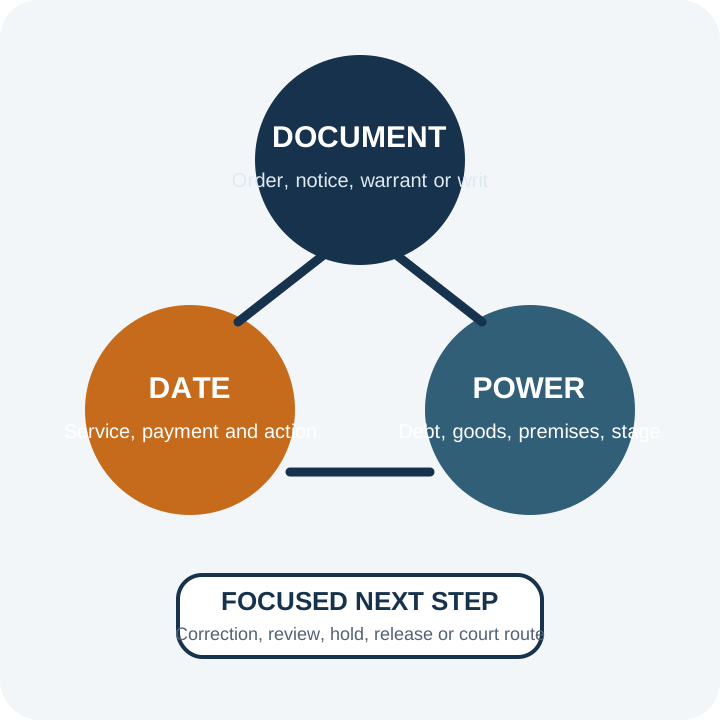
The route finder narrows the problem without pretending that one general rule answers every debt stream.
Choose the enforcement route
Account history, liable person, reductions, liability order, referral, notice, affordability and fees.
Open the council tax hubCourt finesCourt case, statutory declaration, payment review, Warrant of Control, entry and fees.
Open the court fine hubHigh CourtJudgment, transfer, writ, stay, set aside, enforcement stages, company debt and goods.
Open the High Court hubTraffic debtsStatutory notices, old addresses, TEC forms, local-authority warrants and vehicles.
Open the traffic debt hubJason Bennison's practical framework
The useful question is not simply whether a bailiff can act. It is whether this officer can take this step, under this power, against these goods, at this stage.
Jason Bennison, Beat the Bailiffs
That question directs attention away from slogans and towards the paperwork and evidence that can change the analysis.
Read the editorial approachIdentify the order, warrant, writ, notice, ledger or agreement that gives the action its legal and factual basis.
Build the sequence from service and knowledge to attendance, payment, clamping, removal, filing or sale.
Match the action to the debt, premises, goods, entry history and enforcement stage.
Choose the decision-maker and ask for a defined correction, hold, review, release, complaint outcome or court order.
Problems people search for
How the £35 consultation is positioned
Provide the debt type, complete notices, date chronology, fee or payment record and result sought.
The consultation focuses attention on the document, date, enforcement stage or evidence that deserves closer examination.
The response can distinguish creditor, court, enforcement-company, complaint and procedural routes.
Further drafting, court work or other assistance is separate unless the consultation terms expressly include it.
The form states the current scope, payment process and submission terms.
Reference-quality resources

Publisher and editorial responsibility
Jason Bennison publishes Beat the Bailiffs. The website uses debt-specific routes, source links and question-led explanations to help readers identify what deserves closer attention.
About Jason and the editorial methodA clear paid route
Send the debt type, complete documents, date chronology, evidence and the result needed.
The material is organised around the controlling document, enforcement stage and disputed fact.
The consultation identifies the route that appears most relevant from the material submitted.
Drafting, representation or ongoing casework is separately scoped and agreed.
Rules that cut across debt streams
Focused £35 bailiff consultation
The consultation provides an initial document-led review to identify the central enforcement issue, the evidence that may matter and the most relevant route to consider.