
Bailiff debt streams
Choose the debt stream before choosing the remedy
Council tax, court fines, High Court judgments and traffic penalties use different documents, powers and challenge routes.
Direct answer
The debt determines the documents and decision-maker
Start with the court or authority that created the enforcement power. Then identify the current document and action.
Not sure which document controls the route?
Compare the liability order, Magistrates Court Warrant of Control, High Court writ of control and traffic enforcement warrant.
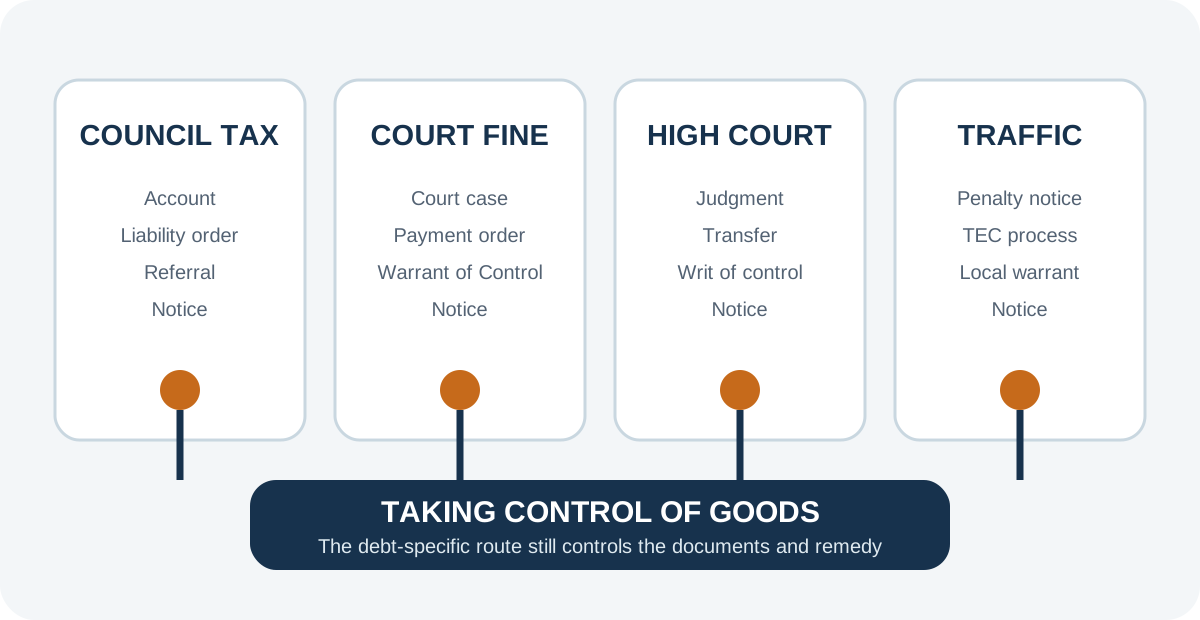
Compare the starting documents
Four enforcement routes at a glance
| Debt stream | Starting record to obtain | Enforcement instrument or route | Decision-maker often involved |
|---|---|---|---|
| Council tax | Council account and liability-order record | Liability order followed by taking control of goods | Billing authority, enforcement firm and in some issues the court |
| Magistrates Court fine | Case, conviction or order and payment record | Warrant of Control | Magistrates Court and enforcement firm |
| High Court judgment | Judgment and transfer record | High Court writ of control | Court, creditor and High Court enforcement officer |
| Traffic penalty | Statutory notice chain and Traffic Enforcement Centre record | Local-authority warrant of control | Enforcement authority, TEC and enforcement firm |
Debt stream
Council tax bailiffs
Account, liability order, referral, vulnerability, payments and statutory fees.
Debt stream
Magistrates' Court fines
Court case, Warrant of Control, statutory declaration, payment review, entry and fees.
Debt stream
High Court writs
Judgment, transfer, writ, stays, set aside, fee stages, company debt and goods.
Debt stream
Traffic and parking debts
Notice chain, Traffic Enforcement Centre forms, warrant, address history and vehicles.
Focused next step
Use the £35 bailiff consultation to identify the issue that matters
If the correct stream is clear but the documents point in different directions, submit the complete sequence through the £35 consultation.
Submit the debt type, documents, dates, action already taken and the result you need.